
Convenience paradox
it's the rough edges that make a life

Good day!
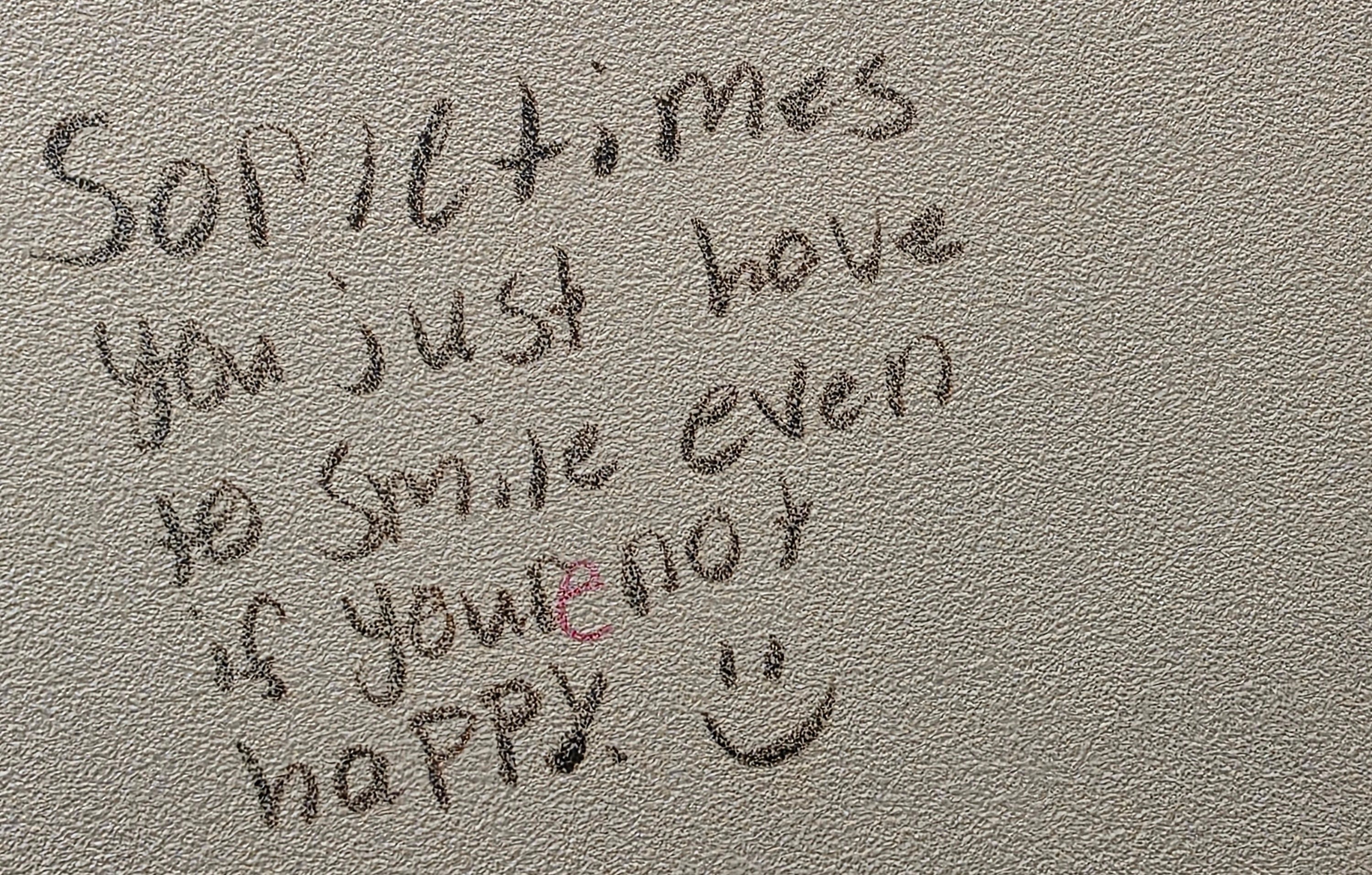
In my reading this week, I came across the idea of the “convenience paradox.” Basically, this is the idea that the rich variety of convenience apps and hacks in our lives is harmful to our physical and mental health and frays the social fabric of our neighborhoods and broader communities.
About the “smoothness” convenience apps purport to provide, Oliver Burkeman writes,
“But smoothness, it turns out, is a dubious virtue, since it’s often the unsmoothed textures of life that make it livable, helping nurture the relationships that are crucial for mental and physical health, and for the resilience of our communities.”
We carry the idea that the convenience apps save us trouble and create more time to do the things that are really important. But what if mowing your old neighbor's lawn instead of hiring a service, or picking up a friend instead of automatically calling Uber, were the really important things?
What if we are missing out on life by offloading every inconvenience that not only makes money for big tech from our unwillingness to engage in life, but also allows them to harvest our data to predict what we will want next, so they can rush to provide it asap. That sounds dark, huh?
But it is not just activities that we engage in with friends and family, those are kind of easy to understand. But what about the tasks we do that bring us in contact with our wider community?
As I thought about this and did a quick audit of my own convenience-y experiences. I uncovered a few that made me reconsider my ways.
Close to our house is our favorite Indian restaurant. Their food is supreme! We like to eat in but will often order to go, especially if there is other food being eaten or we have a game night planned. When we order take away, we can go to the restaurant, order and wait, call it in and then pick up, or use an order online app and pick up, or order it online to be delivered. I usually order online and then pick up. There is minimal contact with the restaurant staff, other than a quick “hello” and “thank you.”
I thought about how when I call in, I get to hear the server’s voice and ask questions about spicy levels and any other ingredients I am wondering about. It is brief, but always lovely. Even better is if I go in to order and wait. It rarely takes more than 15 minutes, but it is heavenly because I get to sit in a darkened restaurant and smell the rich aromas of the food. I am always offered a cup of tea and some rice pudding while I wait, which is entirely different than ordering and paying on my phone and rushing in, grabbing the food, and hurrying back to my home bubble.
2. Even at McDonald’s, technology is used to minimize human contact. We sometimes go through the drive-through in the morning on the way to school so my son can buy an iced coffee. After we order, we stop at a window to pay and another to pick up the coffee. Both of those tend to be especially pleasant visits because the employees have been there for a long time, and this particular McDonald’s is really well run and efficient. It is a treat to pick up a coffee from the same person each morning for months. We exchange small pleasantries, and although I can’t claim them “friends,” they are friendly and good people who make me see my entire community in a positive light. The world feels positive and a little safer because of these small connection boosters.
BUT, we recently downloaded the app that allows us to order online and then give a number at the stand, bypass the payment window, and pick up the order. This small change removed over ½ the human interaction of an already fleeting moment and completely changed the mood. So, why not stop using the app and go back to the way it was? I want to, but now I am receiving points and am highly incentivized through discounts and free fries to KEEP using the app. It makes me wonder why McDonald's is willing to pay me (through rewards) to keep using the app - is it more efficient, do they save more money, are there fewer problems when we don’t interact person to person? It all feels gross.
I will continue to monitor and notice the conveniences in my life, this week and onward. And while I in no way call for a complete ban on convenience apps, I want to ask myself a few questions about my behavior as I engage with some, disuse others, and look for ways to disrupt the whole setup.
Which conveniences save me meaningful time versus creating an illusion of efficiency?
What am I doing with the time I've "saved" through these apps?
What basic skills have atrophied because of these conveniences? (Google Maps/Waze?)
What relationships or experiences am I missing by optimizing everything?
Am I becoming reliant on an app, where if it glitches, I feel pain and anxiety?
Am I solving the right problem, or just making a symptom of my busy life more bearable?
Could accepting (even inviting) some inconvenience make me more present, more resilient?
I would love to hear your perspective on this idea of the convenience paradox and how you embrace or dismantle it.
Food for the Revolution
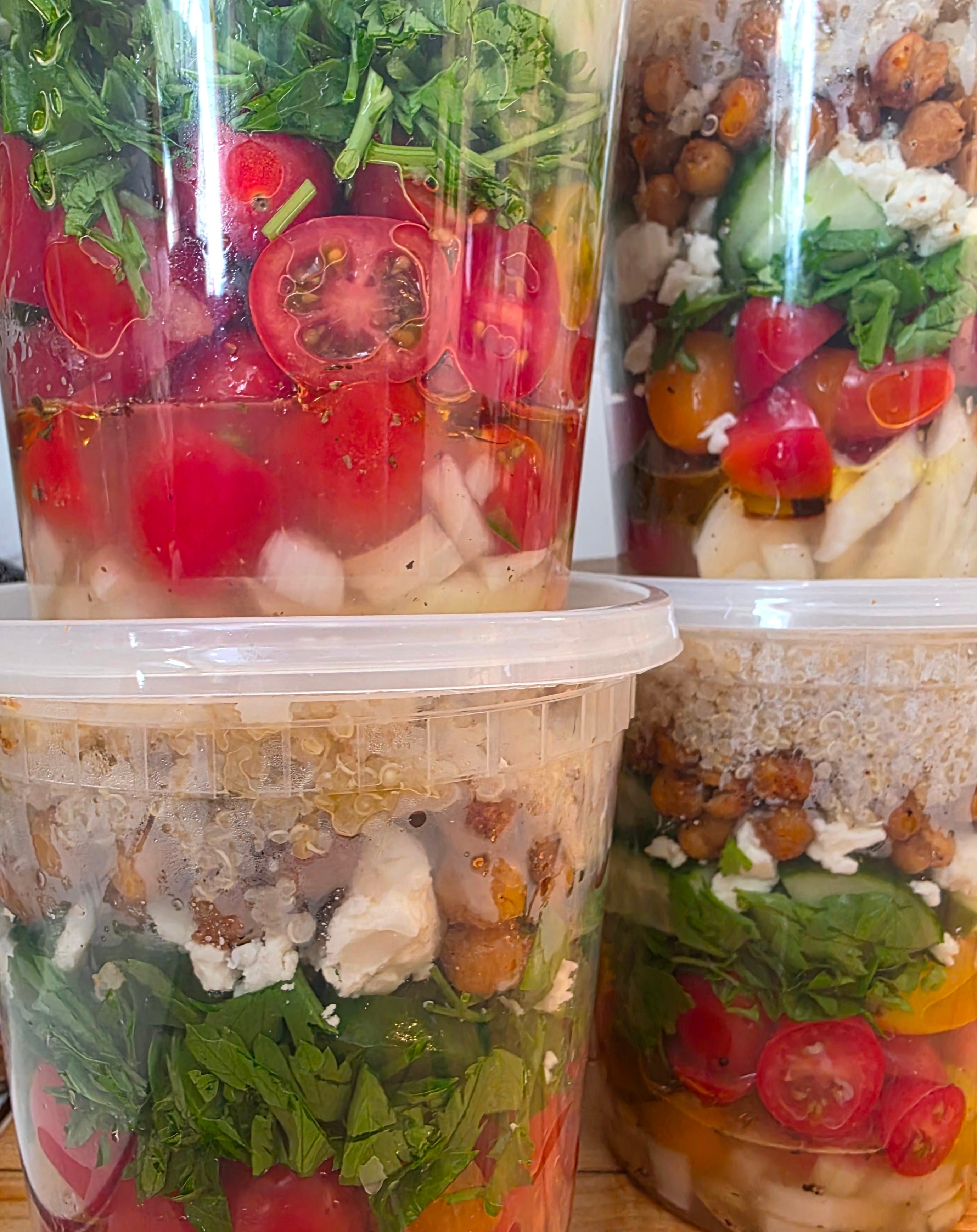
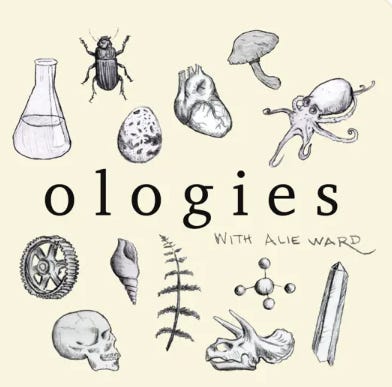
Creating my convenience hack with prepped chopped salads. I love these deli containers and preparing 4-6 for the week. They are a hit!
Listening: Ologies
I am a HUGE fan of the podcast Ologies, which is a fast-paced, kind, deep dive into a range of subjects with experts (natural science, history, medicine, art, cultural topics). Start by listening to episodes of topics you are interested in, but then expand because every episode is fascinating (I listened to one on veins, which blew my mind).
A few favorites:
Discard Anthropology (GARBAGE) Encore with Dr. Robin Nagle
Thanatology (DEATH & DYING) with Cole Imperi
Museology (MUSEUMS) Encore in Memory of Ronnie Cline
Teratology (MONSTERS) with Dr. W. Scott Poole
Functional Morphology (ANATOMY) Encore with Dr. Joy Reidenberg
I just listened to this episode on AI, and it was fascinating and enlightening.
Takeaways:
AI won’t destroy humanity. People will, and maybe those people will harness AI as one of their tools. But it can also be harnessed to do great things like disaster mapping.
Many AI providers have walked back on commitments to not partner with governments and war mongering (this is not good).
When DEI initiatives are dismantled (like community guidelines at FB), AI becomes more racist and misogynistic. The feedback loop magnifies the problem.
There are many, many lawsuits right now that are trying to force AI companies to be more transparent about their data and how they acquire it.
Also, UnitedHealth Care was using AI to treat patients, with the outcomes aligned with profit over healing (imagine the computer, not a doctor, creating a treatment plan based on sketchy criteria), which created some devastating effects.
Don’t listen to the big techs’ promises - they are inflated. AI is kinda janky and in some regards getting worse with hallucinations, misdiagnoses, and straight up lying.
Looking forward to Wednesday’s creative lab! Join here if you need a little assignment, reading, and provocation each week.
My 15 yo has an internship this summer in the old town/downtown area of Albuquerque. After I drop them some days, I will drive to different places or areas without GPS so that I am discovering and following curiosity and not simply going from point A to point B