
doing nothing tools: repair, listening, + maintenance
week 2 : the case for nothing

Good Sunday! I hope wherever you are, you are warm and safe. In Connecticut, we are expecting the snow on Sunday and Monday, but the week-long cold snap has already begun, and we are freezing in single and low double-digit numbers. I spent the last few days prepping for the potential of a bad storm. Groceries, fuel check, battery check, shovel, and salt check.
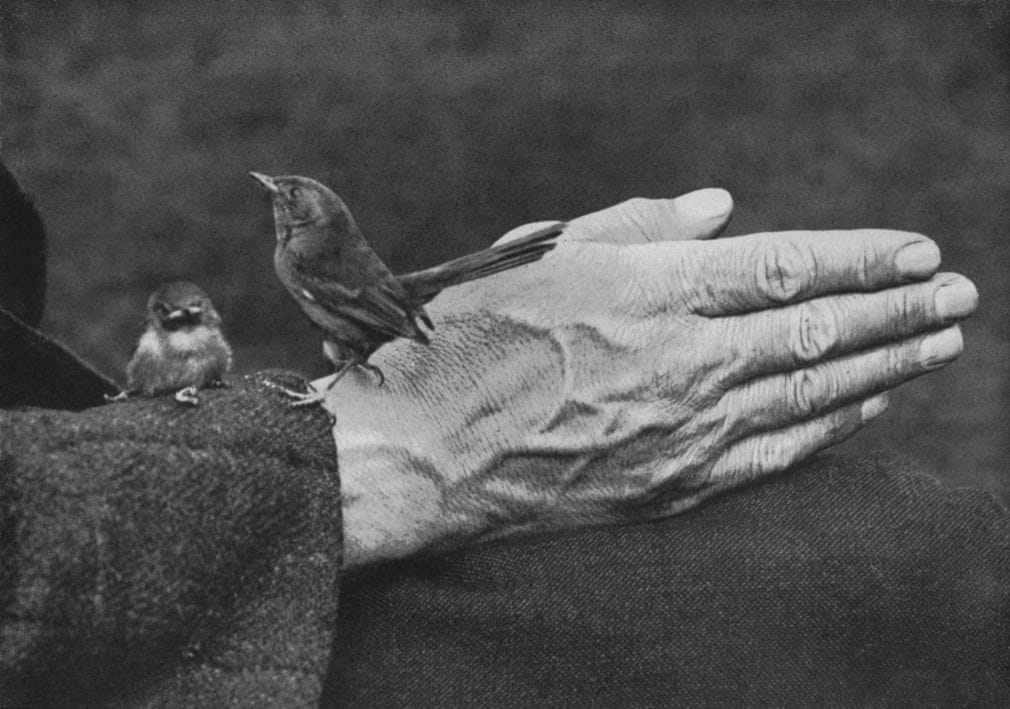
A heartening scene in the stores was the number of people who had birdfood in their carts. My neighborhood chat reminded people to stock up and feed the birds, which is important in the winter but especially when everything is covered with 1-2 feet of snow. Many carts in the local Walmart and grocery store were filled with toilet paper, snacks, (no salt - it's all gone), bags of dog food, and bags of bird seed. The local bird supply store was also bustling. That, combined with neighborhood collections and deliveries to the local warming stations, makes me grateful to live in an area that respects and takes care of one another - neighbors, unhoused folks, immigrants, and the tiny backyard birds. There is a sense of responsibility to one another.
Love is at the root of everything. -Mr. Rogers
One idea that Odell’s book has me thinking about lately is the idea of maintenance instead of disruption or novelty. This week, I enjoyed charging flashlights, cleaning out p-traps, installing and adjusting storm windows, adding degunker to my oil tank, returning library books, and stocking essentials. There is a real dopamine hit associated with completing a task, and the built-in feeling of preparation and risk mitigation adds to the benefit.
I am curious if you feel the same thing? Are there maintenance jobs you can schedule? Do you already do this asa routine?
Some other ways to enjoy maintenance work:
I’ve been following this guy on social media and receive his weekly home maintenance chores. I like that they are easily integrated into the week and that he explains how to do them. This would be great to use with kids to teach them basic maintenance.
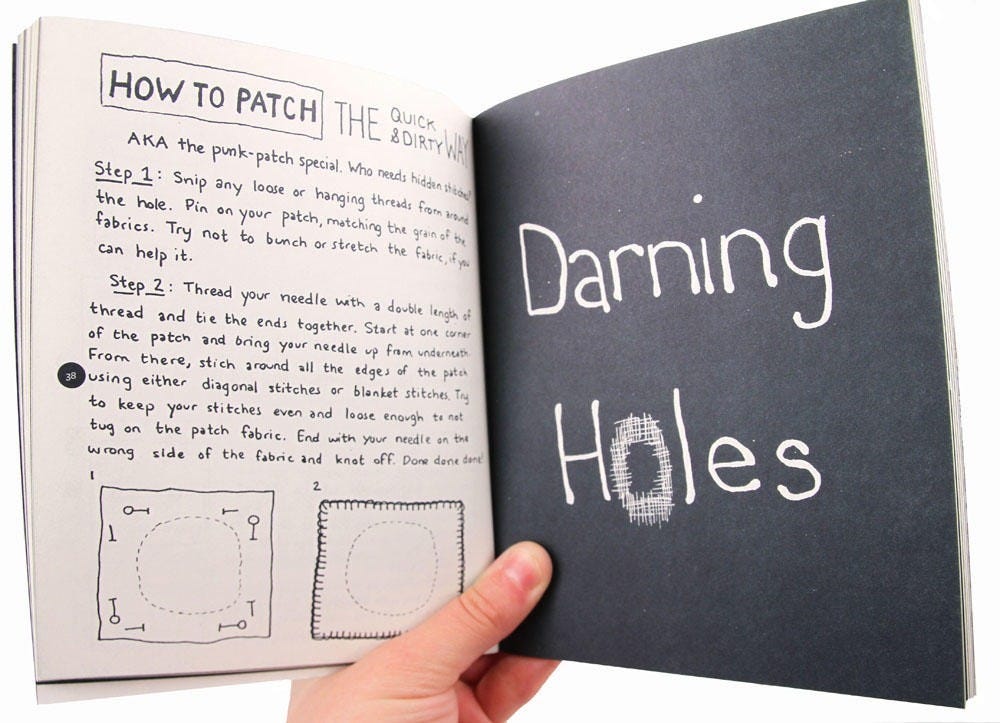
Mending and repairing are something that I am trying to learn to do. I have a few cashmere sweaters with tiny holes that I want to “visually mend.” They are ready, I am just nervous to start.
Food Prep is tricky. It is hard to plan for the week around here, but there are a few things I make over the weekend that are helpful, including granola, hard-boiled eggs, salsa, stock, no-knead bread, and waffle batter. The key is to figure out what you can do that is easy, fun, and lightens the load.
Doctor’s appointments feel like a pain before you go, but hopefully a relief afterwards if all is well. I love the “after” of the dentist, doctor, annual tests, etc. It feels like a new lease on life. If something is wrong, the information and treatment plan frequently feel more manageable than whatever dark ideas were brewing in my mind.
Deep cleaning one appliance, like the toaster or coffee maker, can give a sense of accomplishment. This is something to do when on the phone. I am not a clean freak, but really getting into the crevices is fun.
Please share your maintenance ideas (and frustrations). Maybe it is an area for discovery? Or one you already have down! Either way, I would love to hear your take.
Have a great week, stay warm, and consider subscribing as a paying member to support this space. Wednesday, I will be sharing more from Deep Listening by Pauline Oliveros, including some of her provocations, a wonderful list of sound questions, links, and a new zine idea.
week 2/chapter 1: The Case for Nothing
This chapter could keep me busy for a year. Below are discussion/journal questions, chorus of the other voices/works of art, lexicon, my notes, and activity ideas.
“Leave me but a little to myself.”
-Othello, Shakespeare

questions
What are the structures that hold space and attention in your life? (for me, it is the breakfast table when I watch the birds in the morning, and the local parking lot).
Have you had a period of removal like John Muir or Odell’s dad? What were the circumstances, and how were you changed? How does gender affect this experience? Can you organize more opportunities for removal? (childbirth, illness, travel, breaks in jobs, recovery, accident…)
Are there public spaces near you? (places where you can be and nothing is expected of you, think libraries, parks, commons.) Are they easy to access? When was the last time you spent time in one?
What are examples of direct sensuous realities in your daily life? Are there many, lacking, or not even something thought of?
How have you seen your community strengthen in a disaster?
a chorus of voices
Odell’s project, The Bureau of Suspended Objects
Giles Deleuze “What a relief to have nothing to say…”
John Steinbeck “...open the page and let the stories crawl in by themselves.”
Eleanor Cooplola, 1973 art project Windows
Scott Polach, Applause Encouraged
Pauline Oliveros, Deep Listening
John Muir’s accident that led to his vow to study the world
John Cleese
Samuel Gompers, labor leader, “8 hours of what we will”
Eric Holding and Sarah Chaplin’s book, Consuming Spaces
Franco “Bifo” Berardi, After the Future
Jia Tolentino, “The Gig Economy Celebrates Working Yourself to Death,” New Yorker
Jennifer Ackerman, The Genius of Birds
David Abram, Becoming Animal: An Earthly Cosmology
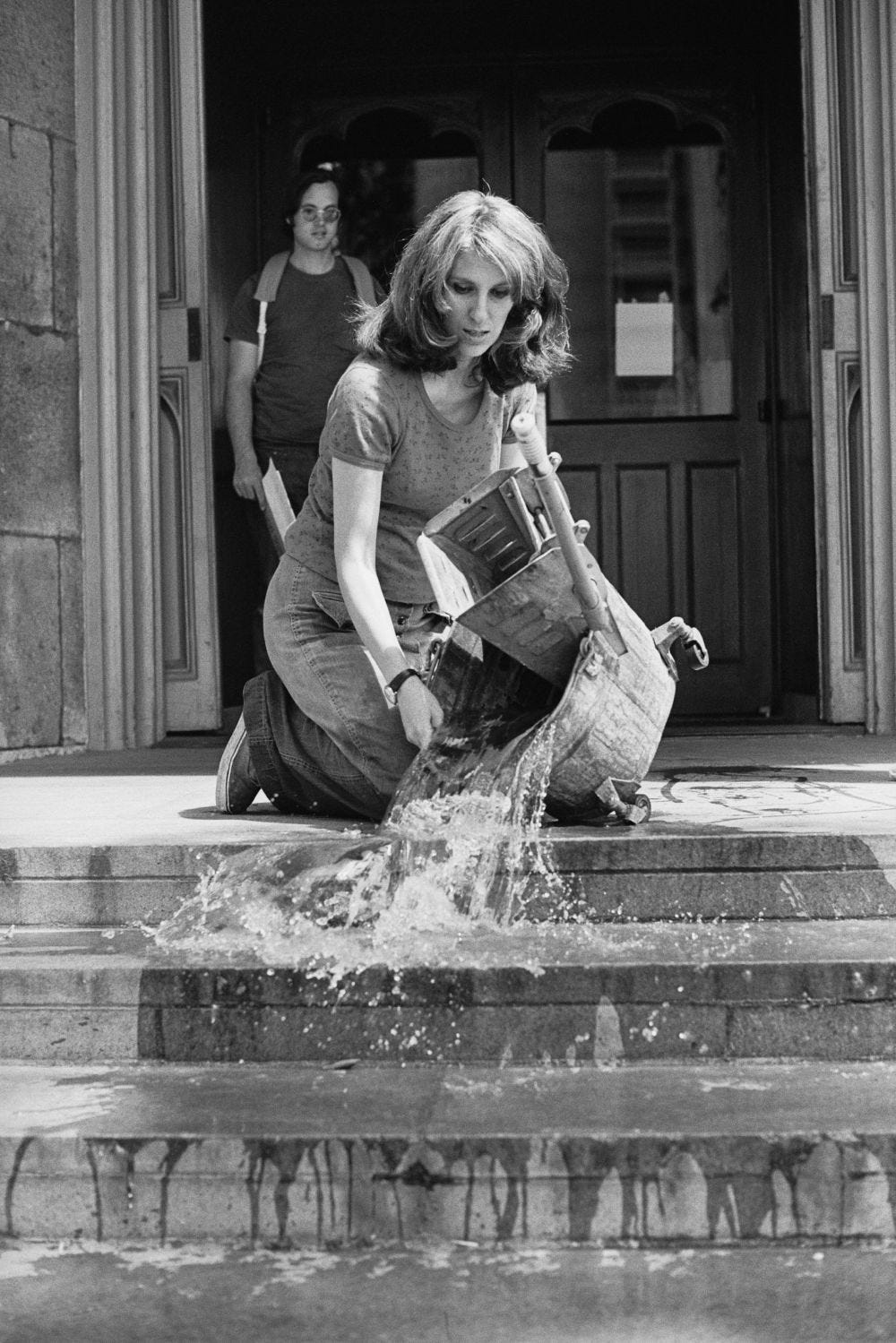
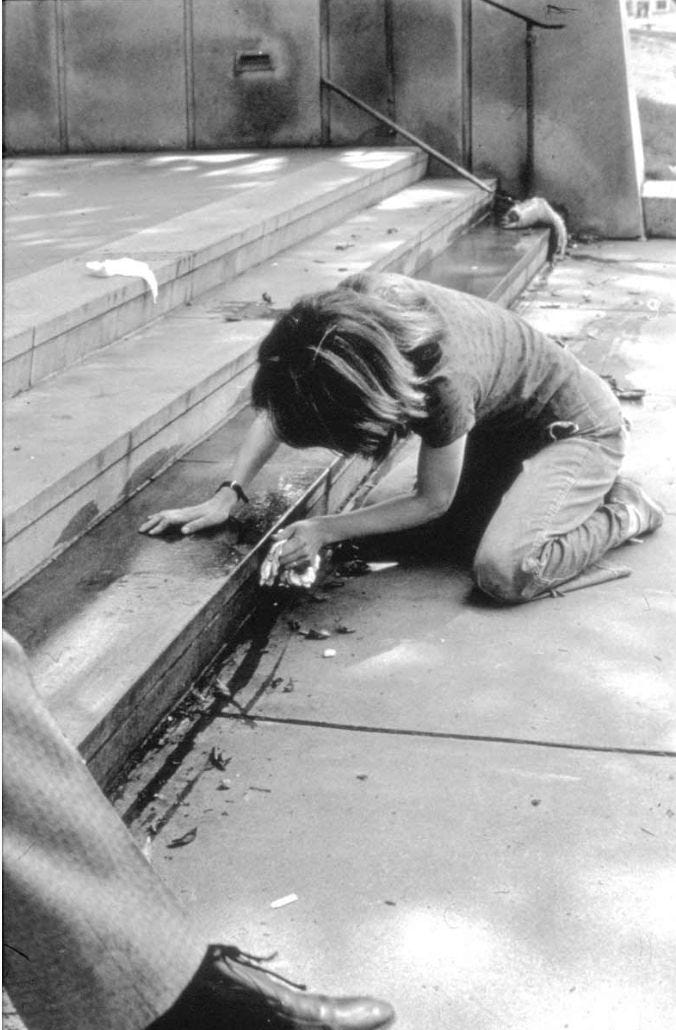
Mierle Laderman Ukeles, Maintenance Artist
Won’t You Be My Neighbor?, documentary about Fred Rogers
Rebecca Solnit, A Paradise Built in Hell
lexicon
observational eros - near paralyzing fascination with one’s subject
attention -holding architecture
Labyryths
Unfolding spaces
Period of removal
Public spaces
Scripted spaces
Gig economy
ROWE - results only work environment
Deprogramming
Disassembled
Connectivity + sensitivity
Notes
The art public art projects she highlights are so accessible and reproducible. I love the idea of gathering people specifically to watch a sunset (and applaud at its conclusion). One of my students created a similar idea last semester when we designed “attention sanctuaries.”
“Artists can create the structure that holds contemplative space against the pressures of habit, familiarity, and distraction that constantly threaten to close it.” YES!!!
Pauline Olivero’s book Deep Listening is filled with exercises that can be used individually, with a partner, or in groups/classrooms.
Public spaces are becoming rare. I feel like parking lots are a new public space and have written about and made images from them. I want to re-engage with this project!
I am becoming more sensitive to the insidious idea that something is less valuable if it is commercially unproductive. She writes that the effect of this mindset is a “colonization of self by capitalistic ideas of productivity and efficiency.” Obviously, there are times when productivity or efficiency are useful goals, but we seem to worship those ideas at the detriment of every other idea. It is useful to notice the cultish rhetoric of this mode and question it regularly.
Berardi’s idea that after the labor movements' decline in the 80s, we all became entrepreneurs hits hard. We now are taught to believe that we are “brands” and that all life is a “economic venture.” The devastating impacts on the human experience because of the “gig” economy are everywhere. The idea that we must be working all the time, that an hour not working is wasted, has shaped the anxiety of the age, I say. The lack of consistency and stability has made us twitchy and never able to rest. Even our downtime is frequently mediated, evaluated, and quantified effectively, ensuring we are working for someone else and lining their pockets (hello attention economy!)
Bird watching is an easy and accessible way to connect with nature and other species. Amy Tan speaks and writes about this, too.
Basically “touch grass.”
“Direct sensuous reality in all its more-than-human mystery, remains the sole solid touchstone for an experimental world now inundated with electricity-generated vistas and engineered pleasures; only in regular contact with the tangible ground and sky can we learn how to orient and to navigate the multiple dimensions that now claim us.”
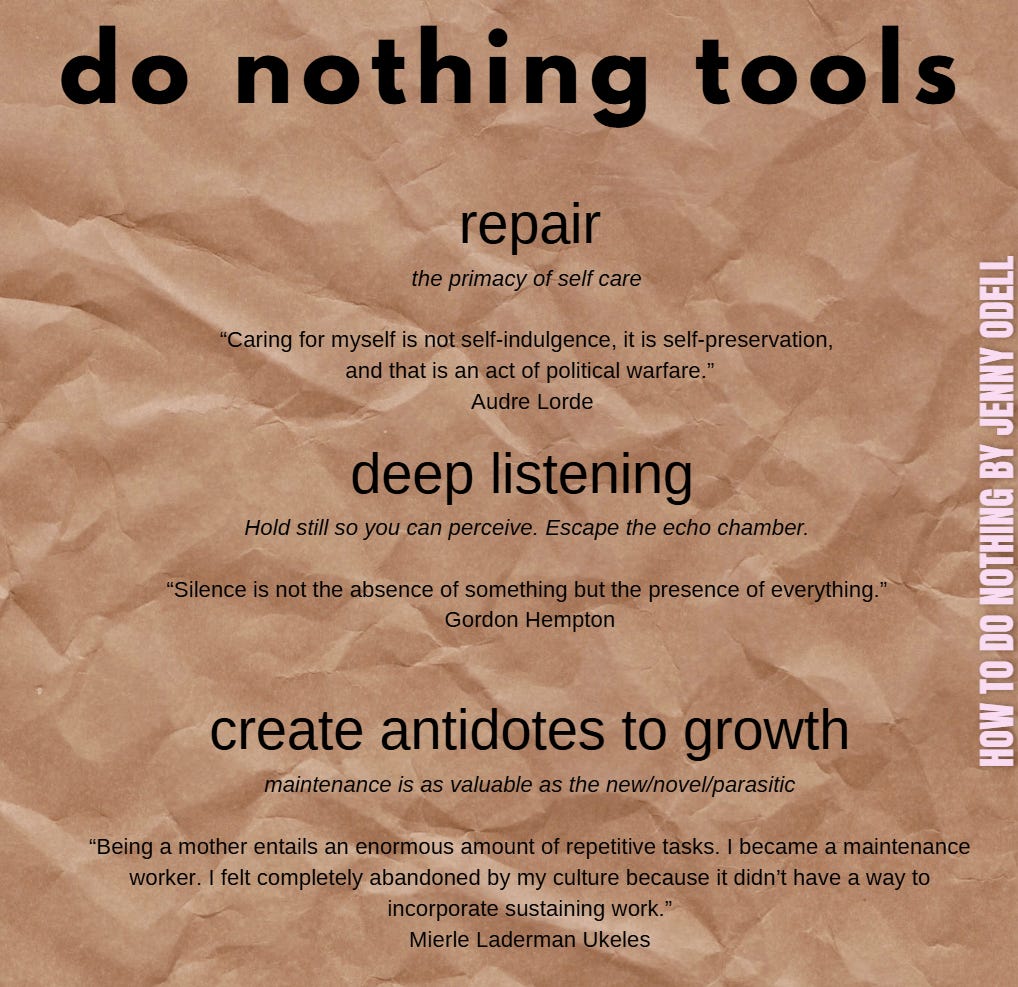
Doing nothing as a deprogramming device. 3 tools: repair, deep listening, antidote to growth (image above for a reminder)
Maintenance, maintenance, maintenance.
Mr. Roger’s questions: Who helped you? Who believed in you? Who wanted the best for you?
Activities
Create an attention-holding architecture in your home or in the wild.
This could be something like:
setting up the table to encourage attention with a puzzle, a handy project, or just pen and paper to take notes while sitting there
adding children’s books to your bedside table (like we talked about in last Wednesday’s lab)
Creating a hanging poster in a public space, encouraging folks to notice something in particular
Removing distractions from a space
Create a list of real self-care,
the kind Audre Lorde considers “ self-preservation and political warfare.” Then schedule the activities.
Deep listening project (more this Wednesday)
Sit somewhere and listen. If you are in the path of the storm, this is a great week to listen. What do you hear? What don’t you hear? Can you anticipate or hear something right before it is obvious? Try for 5 minutes one time, then longer.
Pick one of the voices
that Odell brought in to explore (watch videos of Olivero’s talks or music, explore the Bureau of Suspended Objects, read a chapter of Consuming Spaces….)

I got absolutely captivated by the idea of “structure that holds contemplative space." I started a list and asked my daughter for her impression. I was afraid that by expanding the idea out, I was diluting it too much. She said it sounded like an oracle deck. Well. That was all the permission I needed! I spent the rest of the evening brainstorming more structures and seeing all the ways they relate to each other. I might actually write a guidebook and make a deck!
It was interesting how she talked about the importance of interruption and removal from the sphere of familiarity. I feel like time stops when I look up and see the moon or notice the beautiful clouds in the sky.
For the longer periods of removal, I can think of a couple that I've experienced...one being the time we spent in China. Our experience changed us all in different ways. I think that's one reason I love to travel so much. Each trip changes you in some small way. When I'm traveling, I'm taking everything in, I'm drawn to the discovery, the newness, the novelty. My anxiety actually lessens while traveling because it takes a backseat to the wonder.
Some direct sensuous realities I'm turning to for comfort this winter is standing in front of the fireplace, using my heating pad on a daily basis, breathing in the fresh, crisp, cold air, and hot showers!