
how to do nothing + be useless
week 1 slow read Jenny Odell

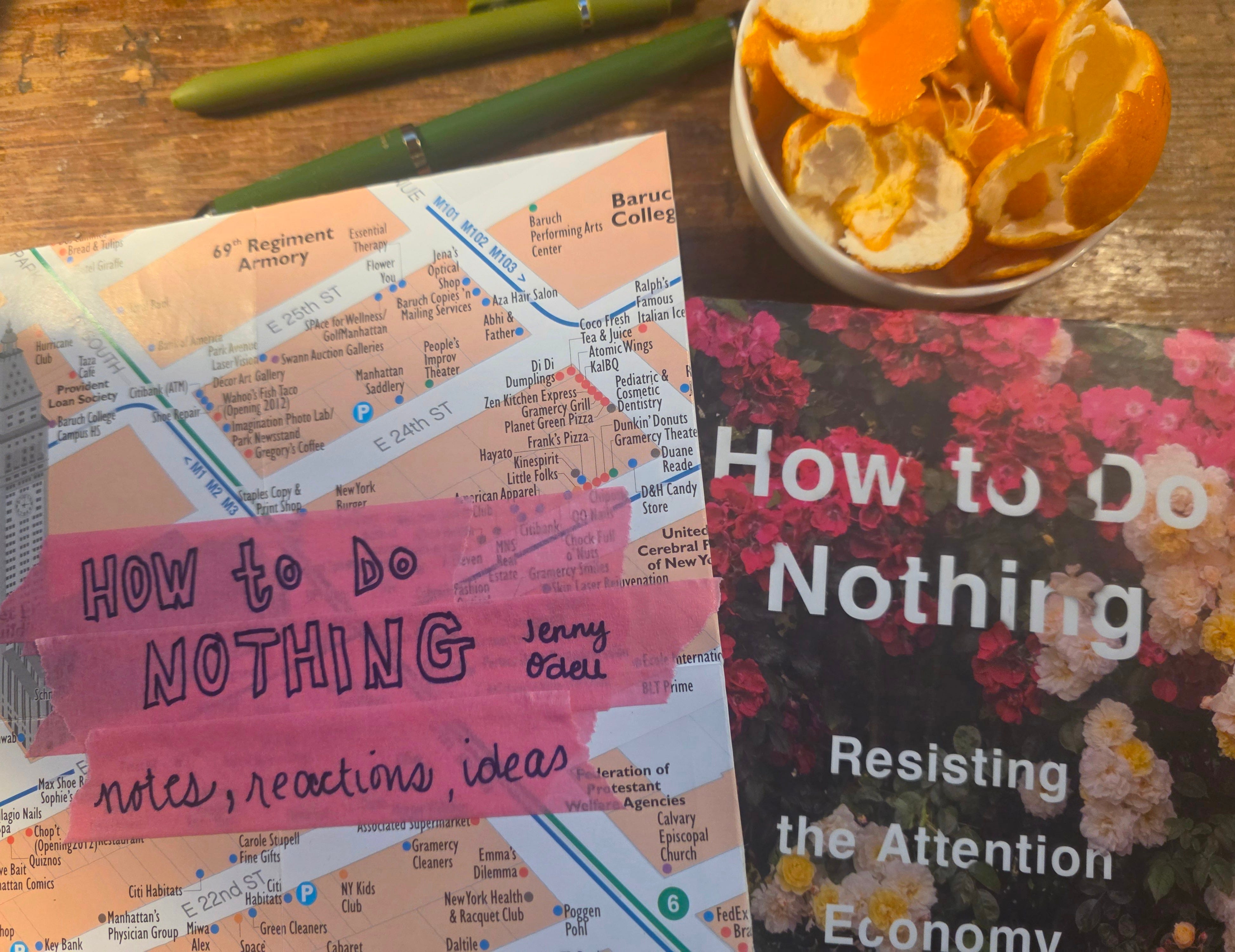
Yesterday, I had a do-nothing day.
Well, that is not exactly true. My mind fights to tell me I wasted the day, but I am resetting that capitalistic inclination, the productivity guilt. I did do a lot of stuff - but it all fell outside of the parameters of “useful” or “productive.
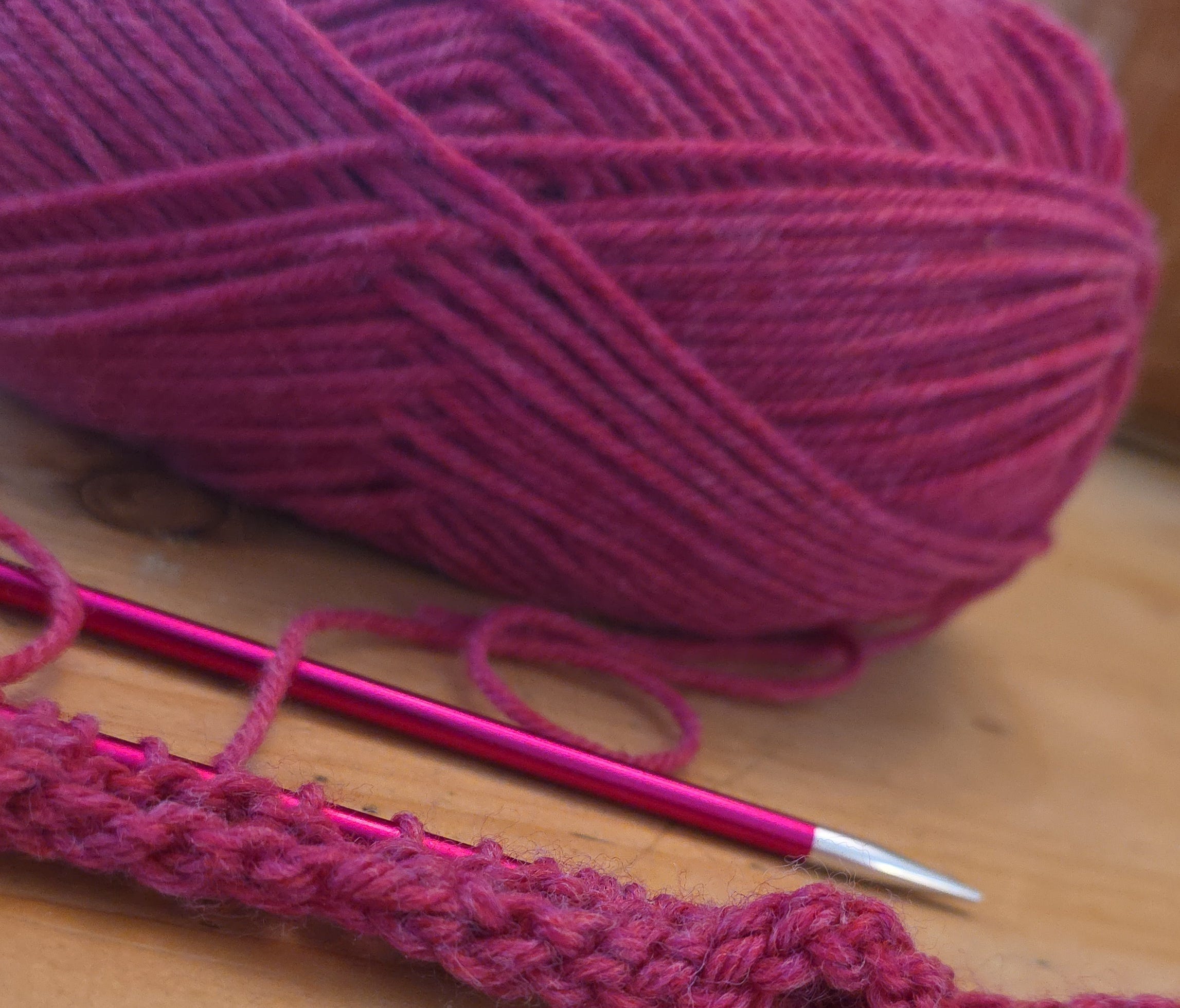
I spent time knitting poorly. I am learning this new skill and likely won’t move past the washcloth phase, but it is so relaxing while honing my attention and looking skills, I will keep at it.
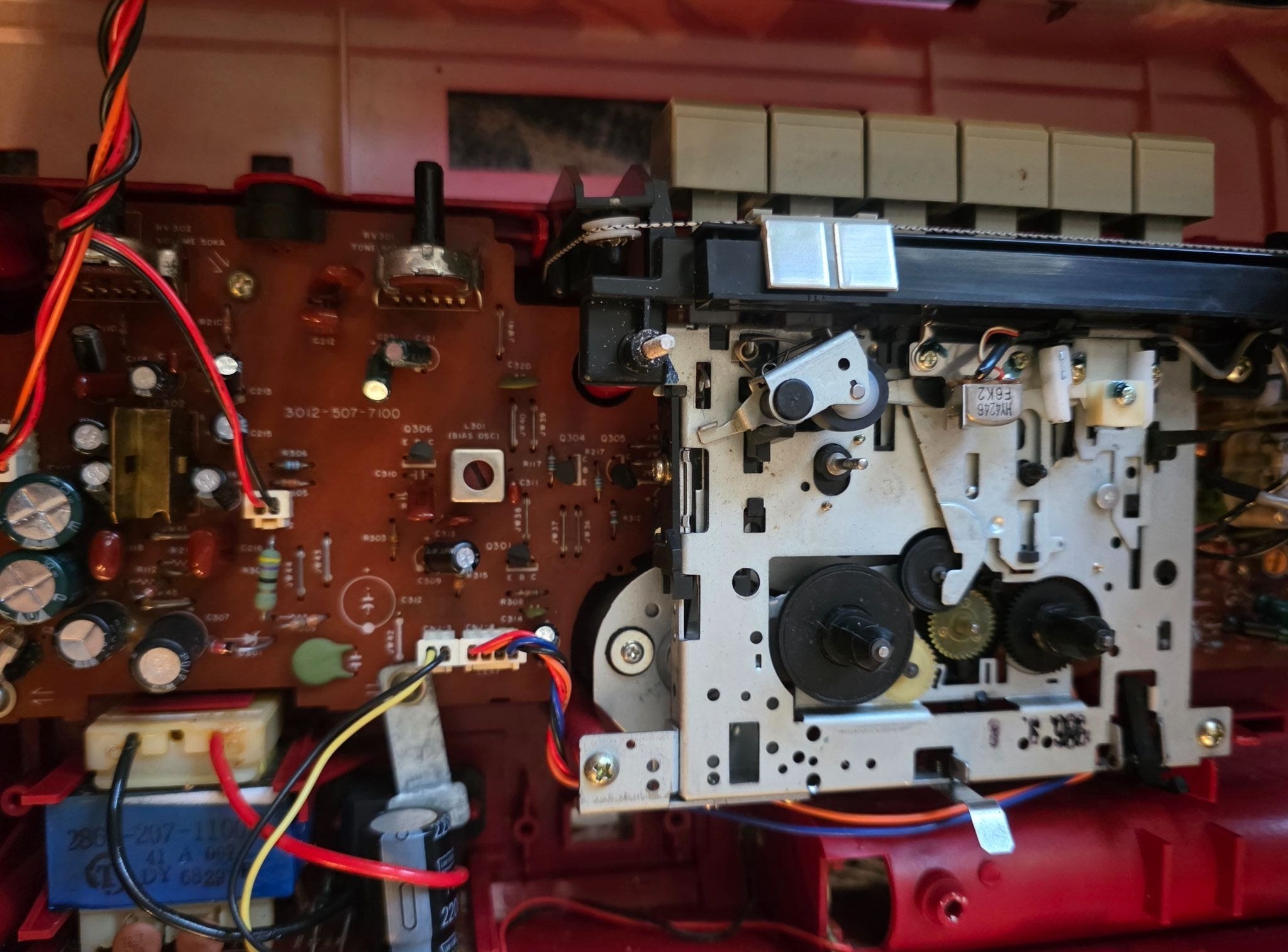
My son and I spent a long time taking apart a 1986 red(!) Sony boombox I bought at Goodwill. The cassette player is laggy, and I tried to fix it - which was a bust. But this nonproductive activity was interesting and encouraged delicacy of hand and close, close looking, and thinking. Plus, the inside was beautiful.
I went to pottery, where I continue to make hand-built “sloppy” pieces that I love. I am learning about the material in a slow way and fixing some art class trauma from my childhood. So, pinch pot cups and wobbly plates it is. I feel like I am making dishware for a midnight forest bacchanal.
It is fair to say that I am an amateur in all these pursuits. And I am not an amateur trying to become skilled; I am happy to stay in this playful space forever.

The word “amateur” comes from the Latin word for “lover,” and it refers to someone who engages in an activity for the love of it, rather than for professional reasons. Being an amateur is not something to be ashamed of—in fact, many notable folks were amateurs in fields outside their main expertise. I have an inkling that being an amateur in another field helps the area that you are highly skilled in.
These examples show that long-term amateurism can lead to real skill, too, but when divorced from necessity and driven by interest and passion, the outcomes are perhaps more fulfilling or enriching to the whole of a life.
Lewis Carroll, the author of Alice in Wonderland, was also an amateur mathematician. He wrote several mathematical works that are still respected today.
Florence Nightingale, famous for her pioneering work in nursing, was also an amateur statistician. She used her statistical skills to improve healthcare and sanitation, making a significant impact on public health.
Sylvia Plath was a cook and tarot enthusiast, two hobbies that were as much a part of her daily life as writing.
Beatrix Potter, known for Peter Rabbit and other children’s books, was also an amateur natural historian and mycologist. She made detailed illustrations and conducted research on fungi that contributed to the field, even though she wasn’t a professional scientist.
Vladimir Nabokov, known for his novel Lolita, was also an amateur lepidopterist: someone who studies butterflies and moths. Nabokov’s passion for butterflies was so deep that he made significant contributions to the field, and some of his work was published in scientific journals. His butterfly collection is still studied by scientists today!
Albert Einstein, known for his groundbreaking work in physics, was also an amateur violinist. Einstein often said that playing the violin helped him think through complex problems. His love for music wasn’t professional, but it was a significant part of his life and work.
These examples show that being an amateur doesn’t mean you’re not good at something (although it could!), it means you’re passionate about it. So, embrace your amateur status, your sloppy crafting, and unproductive waste of time wonderings. Odell suggests it is a form of resistance that can help create space for ourselves in an encroaching world.
week 1 :: introduction
How perfect that the introduction opens with an epigraph by Walter Benjamin, whose work I shared on Wednesday.
“Redemption preserves itself in a small crack in the continuum of catastrophe.”
Before we even start, it might be useful to think about/write about the current state of your attention. Where is it? What derails it? When do you feel connected, focused, in the flow? How does your attentional health feel in your body?

questions
Odell writes in the first paragraph that we “recognize that much of what gives one’s life meaning stems from accidents, interruptions, and serendipitous encounters.” Recount the times in your life when the unexpected happened and became unforgettable. How do you think we can create the possibility for those chance moments?
According to Odell, complex thought, communication, and culture are at stake. Have you noticed impacts in these areas in your life?
Who does your productivity benefit?
On page 16, Odell writes about “resistance in place” as “to make oneself into a shape that cannot so easily be appropriated by a capitalistic value system.” One of her suggestions is to embrace ideas like maintenance as productivity. What might this mean in your life? How does the value and act of maintenance show up already? Are there ways you are interested in developing the practice further?
In your words and through your perspective, what does Odell mean when she suggests “doing nothing”? What would that look like to you? What would that mean to you?
other voices
other writers and cultural references that the author brings into their argument/conversation.
Walter Benjamin, a German cultural critic and philosopher, especially during the world wars
Robert Louis Stevenson, 19th-century author
Seneca, Roman Stoic philosopher,
Giorgio de Chirico, early 20th-century artist
Zhuang Zhou, “The Useless Tree”
Peter Berg, environmentalist
Herman Melville, “Bartleby, the Scrivener”
lexicon
a list of words that stand out or work to build the author’s argument/world/vibe.
nuance
context
poetic
nothing
tolerated
narrowing horizon
unproductive
useless
wizened
Navigation Trees
bioregionalism
citizenship
content collapse
context collection
my notes
ignore, take your own on what stands out, this is not a test!
R.L.Stevenson - busyness makes people
“a sort of dead-alive, hackneyed people…who are scarcely conscious of living except in the exercise of some conventional occupation.” Wow!
Seneca
“Look back in memory and consider…how many have robbed you of life when you were not aware of what you were losing, how much was taken up in useless sorrow, in foolish joy, in greedy desire, in the allurements of society, how little of yourself was left to you; you will perceive that you are dying before your season!”
De Chirico’s lament for the “narrowing horizon for activities as ‘unproductive’ as observation:
“In the face of the increasingly materialistic and pragmatic orientation of our age …. It would not be eccentric in the future to contemplate a society in which those who live for the pleasure of the mind will no longer have the right to demand their place in the sun. The writer, the thinker, the dreamer, the poet, the metaphysician, the observer…he who tries to solve a riddle or to pass judgment will become the anachronistic figure, destined to disappear from the face of the earth like the ichthyosaur and the mammoth.”
We have the right to a community that is not optimized. Tech and social media seem to offer this, but it is a false flag.
To do nothing = resistance
Nothing —> that is recognizable as capitalism
ways to counter this (she will explore in the book)
Drop out
Lateral move outward to things around us
Downward movement into place
Ambiguity is useless in a capitalistic society
Deepening attention to place !!!! (This is a concrete area to take action)
Fighting the invasive commercial social media (cult of individuality/branding of ourselves)
The useless old tree - how being useless can aid in longevity
A field guide to do nothing as an act of political resistance to the attention economy (let’s all create field guides)
Disengage from the attention economy —-> and re-engage with new things
Her overview/what’s to come in the book:
Chapter 1 - state of the crisis (disruption vs maintenance - I am looking forward to this discussion as I lean towards disruption).
Chapter 2 - examples of dropping out
Chapter 3 - refusal-in-place, history of refusal as protest
Chapter 4 - looking at art for new ways of attention
Chapter 5 - stretching the “filter bubble, moving away from personal brands
Conclusion - imagining a utopian (noncommercial) social network

prompts/activities
If you haven’t already, find a notebook to use to take notes about the book, but mostly about how you see the ideas of the book throughout your life. Pick a cheap notebook and turn it into a lab book for the next few months. Nothing precious.
Find the oldest tree in your state/region. Can you visit it? Make a list of what it might have witnessed.
Make a list of other ways you can begin to connect in new ways with places. Try to engage in one of these this week! (examples: coffee shop events, library reading groups, meet ups, master naturalist events, guided hikes, membership to the natural space in your area, houses of worship you can visit, new restaurants or markets you can explore, find your local listener supported radio station, attend a school play or high school sports game, talk to people at the store, stock hydrating drinks, protein bars, or dollar bills, for folks who might need it….)
Chat with your people about the ideas in the book that stand out to you.
Look up one of the authors/artists mentioned and explore their work(s).
Copy a meaningful quote (or the epigraph) and hang it on your bathroom mirror or fridge. Think about it this week.
Schedule a time to do something useless (a whole day or afternoon is ideal!). Invite others to do nothing, fool around, craft badly, burn things in a fire, take turns playing favorite songs….
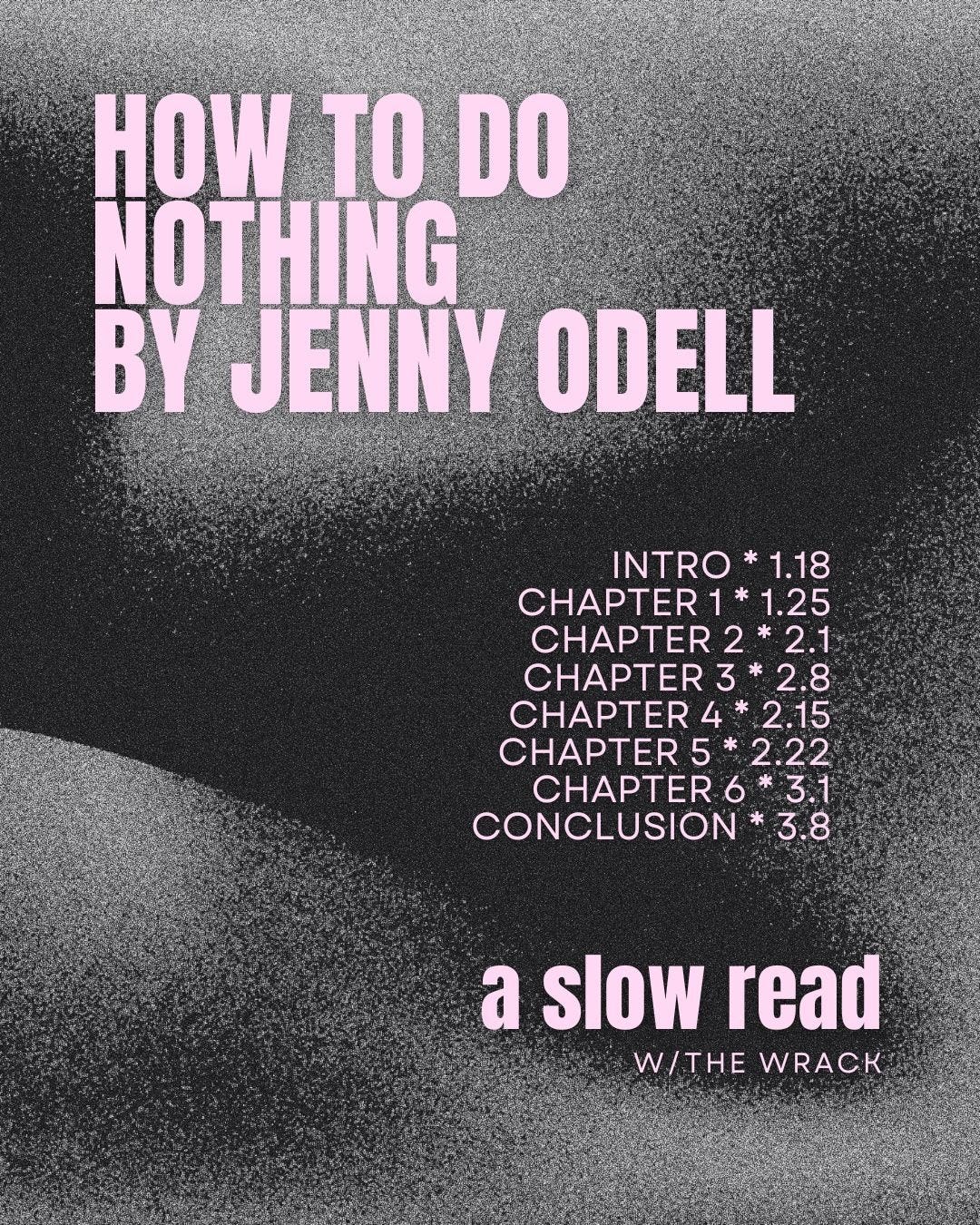
I’m excited to do this slow read with you. I can’t believe I haven’t read this book because Odell is from my city! She did a workshop at the new community space down the street where I’m doing my monthly reading series for caregivers. AND the tree she writes about is five minutes for me! Ooh, this will be fun.
Actually “doing nothing” doesn’t feel good to me. So I define it in terms of doing things that don’t serve a particular purpose or have an end goal. It’s about untethering myself from the narratives of what I ‘should’ be doing. I make a lot of art & craft which is really just junk - I find the process meditative & soothing & it allows space in my mind to think deeply. This is my kind of “doing nothing” (ps love that yr knitting! This fits my definition perfectly!!)