
Ping Practice
attention, manifestos, + syllabi as we move into fall

School starts tomorrow morning here. I will meet a brand new cohort of freshmen and quickly become subsumed in their creative growth, which I love. But today I am spending time grounding myself by remembering some of the projects I (we) did this summer that I can carry forward.
Manifesto
I hung it up finally in my kitchen, where I can see it every morning. I invite people to write on it, making amendments as they see fit.
Syllabus
I decided to print out the whole document in color (a splurge) because Ilike the colors and the images feel fresh and inspiring. I hung pieces of it near my desk and taped the Choose Your Own Adventure menu into my planner. I hope to touch base with it weekly to ensure I am varying my activities and mental engagement past the immediate content of class work.
Attention
And more importantly, I reviewed the attention activities sprinkled throughout the newsletter and labs. I feel like they come pretty naturally, as long as I have them scheduled. That sounds funny. But if I make “attention activity” a chore on my to-do list, it happens and settles my mind.
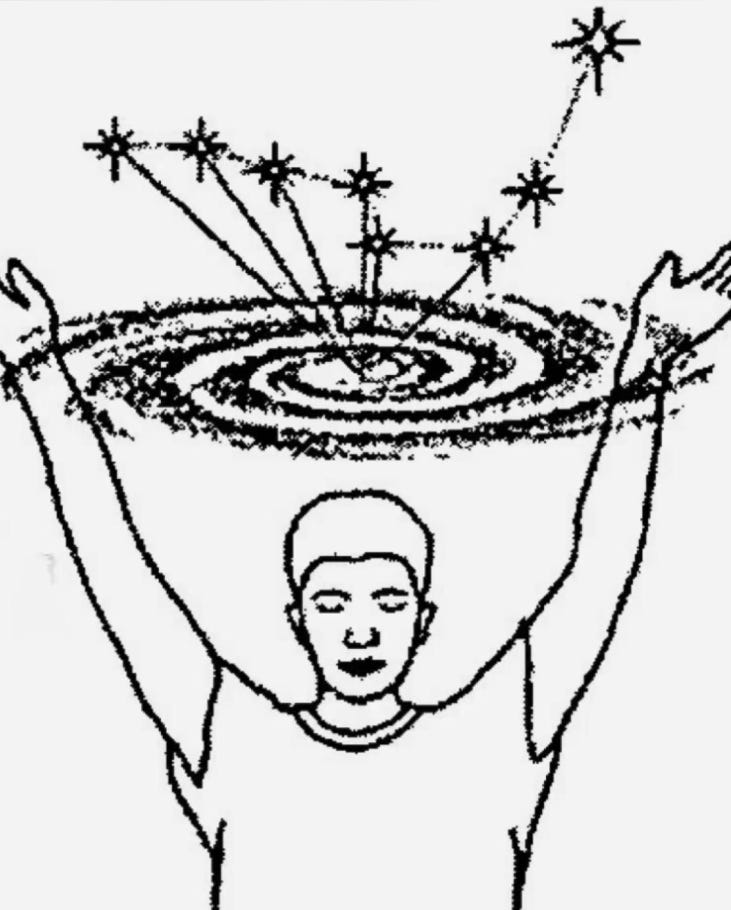
Pings
I found a great new (to me) framework tool related to attention, called Ping Practice.
You can read more here from the developer, but my take is:
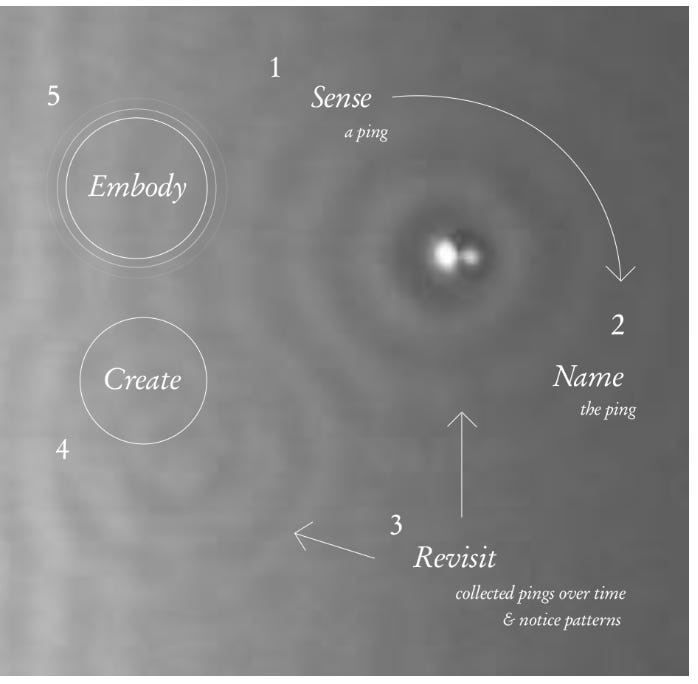
1.
A ping is the tiny shift you feel when something (a sensation) captures your attention/heart/mind. The creators define a Ping as “ a tiny resonant message from the universe.” Maybe you feel it somatically, like a drop in your stomach or a bright flare in your mind.
We tend to move on after a Ping quickly. We have places to go or another activity we are involved in.
2.
But a Ping Practice ritualizes the experience by immediately recording it without judgment. You can jot it down on paper, use your notes app, text/email/voice message yourself, whatever (an app is in development, I think).
When you record your Ping, do so without immediately assigning it value or meaning - name the experience (and time stamp it) so you can remember it clearly.
3.
Then, later on, spend time with, look at, and consider your Pings. Maybe write them in a list or create an index.
Are there patterns?
Can you repeat or return to the Ping?
Are flashes of insight or meaning bubbling up?
4.
Lastly, the creators of this method ask us to create.
Can we create a practice of return?
Can we deepen the Pings?
I also wonder if we can share them with others in collaboration or inspiration.
Basically, how can we keep the Ping Practice going, and how can they transform from tiny blips/portals to sites of knowledge/insight?
I think my pings will be the words I wake up with in my mind (sometimes they are in another voice, like a transmission or I am reading a scrolling document), the ideas that pop up as I am walking, the uncanny feeling that washes over me in strange or familiar places, and the record of physical reactions I have to phenomena. Who knows?
Recommended Reading
Hands-on research for artists, designers, and educators by the Willem de Kooning Academy is packed with ways to deepen your creative projects through research, documentation, making, sharing, and reflection.
How to Be an Explorer of the World by Keri Smith is a classic that supports attention and ping attunement.
Curious Minds: The Power of Connection by Perry Zurn and Dani S. Bassett digs into the idea of networks of knowledge and curiosity.
I would love to hear your plans for Fall and your take on this idea of Ping Practice. I am deep in research of nodal networked systems of learning - so if I can get a handle on it, look for more resources in this vein soon.
Join as a paid subscriber and get the Wednesday Lab filled with actionable prompts and disruptions. This week, I am working on a little document called “Burning Down the House” about creative responses to fire!